
Technical insights, product guides and practical information for industrial handling and riveting equipment.
Manual material handling remains a common part of many manufacturing processes. Workers may need to lift, move, rotate or position metal sheets, components and other workpieces repeatedly throughout the day.
When these tasks involve heavy or awkward workpieces, the physical workload can become significant. This is where industrial handling equipment can provide useful assistance.
Industrial handling equipment does not necessarily mean completely automating a production process.
In many applications, the goal is simply to make a difficult manual task easier and more controlled.
Assistive manipulators, intelligent balancers, jib cranes and vacuum lifting equipment can help operators move workpieces while maintaining manual control over the operation.
For example, an operator may still guide a workpiece into position, while the equipment supports most of the lifting force.
The appropriate handling equipment depends on the actual application.
Important factors include:
Workpiece weight
Material and surface characteristics
Workpiece dimensions
Required lifting height
Horizontal movement
Rotation or positioning requirements
Working frequency
Available installation space
A vacuum lifter may be suitable for certain smooth sheet materials, while a manipulator may be more appropriate when the operator needs greater control over the movement of a component.
The purpose of industrial handling equipment is not simply to lift more weight.
A well-matched system can help reduce unnecessary physical effort, improve workpiece positioning and make repetitive handling operations more consistent.
For manufacturers, the most useful solution is often the one that fits naturally into the existing production process.
Industrial handling does not always require a fully automated production line. Assisted lifting and positioning can also provide meaningful improvements to everyday manufacturing operations.
The key is to start with the actual handling task and then select equipment that matches the material, load, dimensions and working conditions.

Manual material handling remains a common part of many manufacturing processes. Workers may need to lift, move, rotate or position metal sheets, components and ···
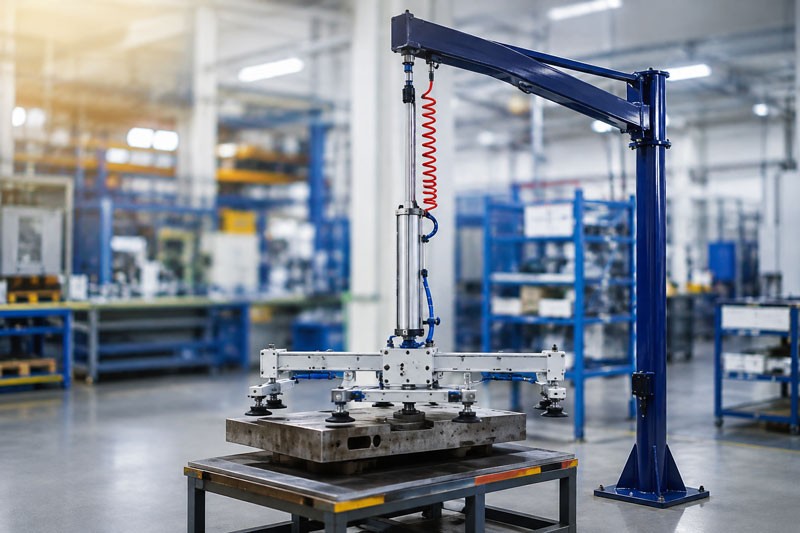
Learn what an industrial manipulator is, how it works, and how it can improve ergonomic material handling in manufacturing and industrial workplaces.
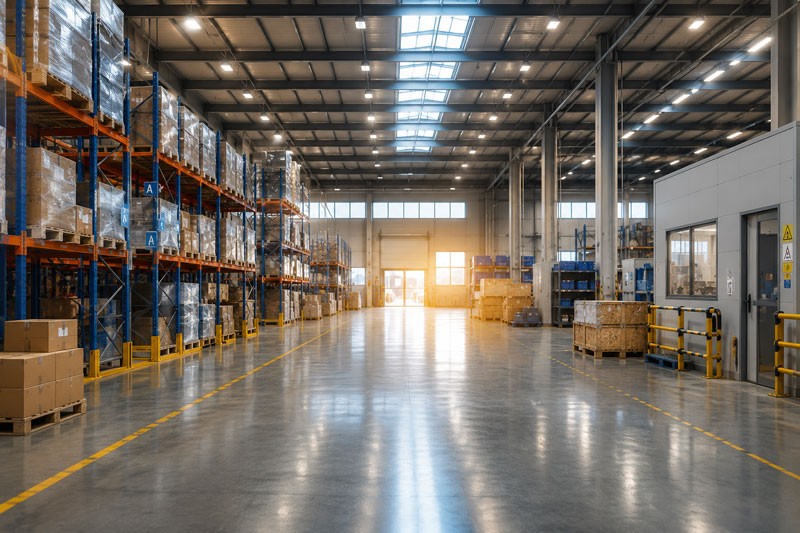
Compare pneumatic and electric industrial manipulators and learn how to choose the right lifting and material handling solution for your application.